|
Three Day Trip - Matsuyama, Hiroshima and Miyajima Island Trinh T.Q.Teresa
Matsuyama The trip began with the meeting of the trainees and JAL Foundation staff member Mr. Sakamoto at Haneda airport. Once check in was completed and everyone had boarded the plane, the 1 hour and 30 minute plane trip to the first destination on the schedule, Matsuyama City, would provide some rest before the beginning of the fun filled three day trip. After landing at Matsuyama Airport, a bus was taken to the hotel that everyone would be staying for the night, Tokyu Inn. The bus provided an array of information such as specialty products from the region, famous places to visit etcetera. It was interesting to note the announcements on the bus were not only provided in Japanese, but also English, Korean and Mandarin. This was an indication that Matsuyama had a thriving tourism industry that catered for visiting tourists.
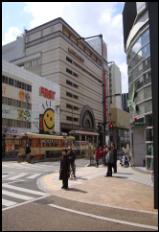
After arriving at Tokyu Inn, we met with Ms.Yuki Hino (Director of the JAL Regional Office in Matsuyama) who had kindly offered to join us at lunch. Ms. Hino guided us from the hotel to the restaurant, which was a lovely stroll since it was a beautiful, sunny and warm day. Whilst walking through the streets of Matsuyama, the differences that the city had, compared to Tokyo was quite evident. Even though Matsuyama’s main streets were quite bustling and busy, seeing the older trams in current use and walking along the quieter streets with an abundance of quaint stores selling local products, gave the city a sense of timelessness.
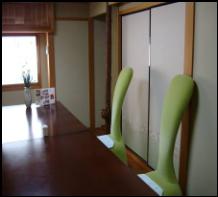
The restaurant Tourika, where we were to dine at was located in a quiet alley street. Our reserved dining room was a pleasant surprise, for it was a mixture of east meets west: tatami mats and traditional Japanese screen doors and fittings together with contemporary designed western chairs. Before lunch was served, Ms. Hino provided us with her opinions and other various information on Matsuyama. We learned of famous places, products and people of Matsuyama and were also highly recommended to try some of the local products.
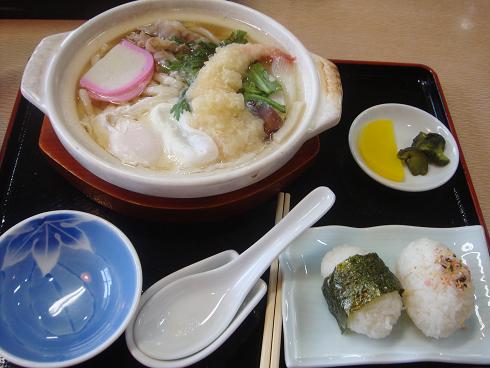
Once our meals arrived everyone was quite impressed with the ascetically pleasing presentation. Before dining, we were given brief explanations of what we would be eating and what condiments were to be eaten with which foods. As anticipated the food was fresh and extremely delicious. After lunch, we expressed our sincerest thanks to Ms. Hino for spending time with us and then bid her farewell.
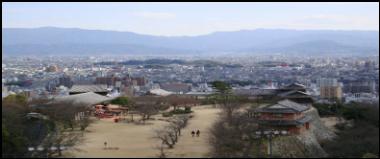
The four of us then proceeded on foot to one of the twelve remaining castles of Japan, Matsuyama Castle. A cable car ride was necessary to reach the castle grounds and once we arrived at the top it was time to explore. Matsuyama castle was impressive from the very beginning. From the looming watchtowers, to the extensive gates that once defended the grounds from invading armies, the castle somehow managed to retain its magnificence from the distant past. The view of the lands surrounding Matsuyama Castle was also a sight to behold. From a look out point inside of the castle, views of the lands to the North, South, East and West could be seen, with each view being quite unique and scenic. The numerous cherry blossoms trees on the castle grounds not yet in bloom only made it obvious that Matsuyama Castle would be even more lovely and impressive in the spring.
A quick tram trip and walk brought us to our next destination on the schedule, Dougo Onsen. The place itself is the oldest onsen facility in the country and even had catered for the Imperial family of Japan. After receiving an extensive and informative tour of Dougo Onsen, we received our yukatas and proceeded to the onsen baths. There were two onsens available in the women’s section; the first was quaint in size, whilst the second was much larger, with the onsen’s water being much warmer than the first. Since it was my first onsen experience, the initial embarrassment of entering the baths was somewhat disconcerting. However, the experience of soaking in the onsen’s steaming hot water was immensely relaxing and peaceful. Upon returning to our reserved room, we ended our onsen experience with some of the famous local sweet, Botchan dango and cups of warm green tea. Shimanami Highway
Unfortunately, the weather on the following day of our trip was quite cold and it rained for the majority of the time. However, this did not diminish the beauty of the areas we were travelling through, but rather the mist, rain and snow added a sombre and desolate feel to the scenery, which I personally found quite peaceful.
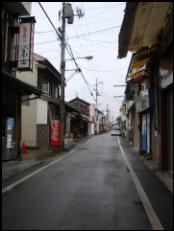
The travelling from Imabari to Setoda was an interesting experience, for we had the opportunity to see the smaller islands of the inland sea between Honshuu and Shikoku, along with the numerous bridges that connect them. After the bus trip to Omishima, a taxi was taken to the town of Setoda. Our taxi ride to the town was very informative. The taxi driver advised us of some of the local information and the history of the town. However, he also sadly told of the gradual decline of tourism in the area caused by the construction of the bridges that presently connects Japan’s two main islands of Shikoku and Honshuu. Since tourists now travel directly to and from Honshuu via the bridges and consequently pass the town, this has in turn caused many of the local stores to cease their business operations. The town itself was quaint and had a sort of quiet homely feel to it. However in the midst of the rain, with only a few stores actually opened for business and with the lack of customers, you could not help but feel sad for the town which once was more bustling and alive with tourists.
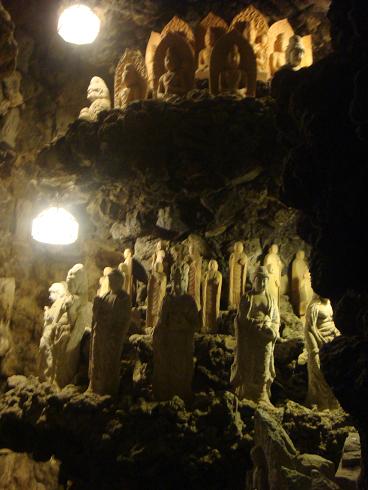
Whilst in Setoda we visited Kosanji Temple, which was constructed and was continually built upon since the mid 1930’s by a monk named Kosan in his devotion for his mother. Kosanji temple, even in the rain was colourful and provided an array of different sights to see. The architecture seemed to be an eclectic mix of buildings of subdued colours, with ones that were overly bright and ornate. In two of the temple’s museum buildings a collection of pottery and paintings could be seen. However, the rain coupled with the extreme coldness of the day, unfortunately made the viewing of the pieces a very quick and rushed experience. The visit to the Cave of 1000 Buddhas was a wonderful experience. The cave was littered with numerous varieties of carved statues. The statues could be found along the cave’s walking paths, some were situated near waterfall features, whilst others were placed in a rising formation that reached towards the ceiling and lit beautifully by strategically placed lights. Also along a section of the cave’s wall were gruesome paintings depicting imagery of the different levels of hell and of people being tortured. Once exiting the cave, an impressive towering 10m statue of the god Kanon loomed in front of us. From that point, we made our way to the house in which the temple’s founder had built in honour for his mother. The house itself was quite charming, with it’s traditional Japanese tatami mat floors and sliding doors, coupled together with western architectural features such as a mosaic bathroom, beautiful glass stained windows and ornate hanging chandeliers. From the expensive materials used for the construction of the house, it could be seen that the founder of the temple was very devoted to his mother and loved her very much. Once exploring of the temple grounds was completed, we departed the town of Setoda via a ferry to the town of Onomichi, where we later by train made our way to the city of Hiroshima.
Hiroshima and Miyajima Island Upon arrival in Hiroshima, we checked into the JAL City Hiroshima Hotel. Once check in was completed we left in search for one of Hiroshima’s famous dishes, okonomiyaki.
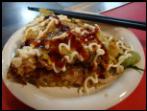
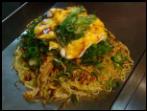
It was decided that we would have dinner in an area with numerous okonomiyaki stalls called Hiroshima Okonomiyaki Monogatari Ekimae Hiroba. Walking through this arcade was truly a unique experience. There were rows of okonomiyaki stalls, each with cheerful stall owners calling out to passers-by to eat their delicious okonomiyaki. Everyone was finally persuaded to eat at an okonomiyaki stall that had a very loud and energetic owner. Besides the other dishes that were served on the night, as expected the two types of okonomiyaki served to us was quite delicious and by the end of it all everyone was quite satisfied and full from all the appetising food.
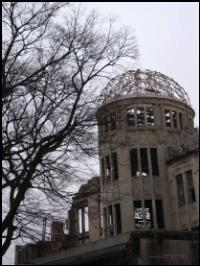
The following day was the visit to Hiroshima Peace Memorial Park. The impact of being able to see the A -Bomb Dome in person was quite strong. Personally it was hard to believe that the structure of the building managed to survive through an atomic bombing which decimated an entire city during World War II. The A-Bomb Dome had a haunting quietness to it that made one appreciate the pain and suffering caused to the people of Hiroshima when the atomic bomb was dropped on the city on August 6, 1945. Walking towards Hiroshima Peace Memorial Museum, there was the Cenotaph for the A-Bomb Victims, which when looked through gave a view straight through to the A-Bomb Dome. The Hiroshima Peace Memorial Museum visit was a truly worthwhile experience. To learn of the events that led to the bombing of the city, to see the magnitude of the destruction that occurred and the pain that families and individuals went through on that fateful day and the following years was quite emotional and somewhat upsetting. However, it was extremely uplifting to see that the people of Hiroshima have moved forward from that destructive day and become an advocate for world peace. It was also inspiring to learn that the city continues to strive for the removal of all nuclear weapons from the world.
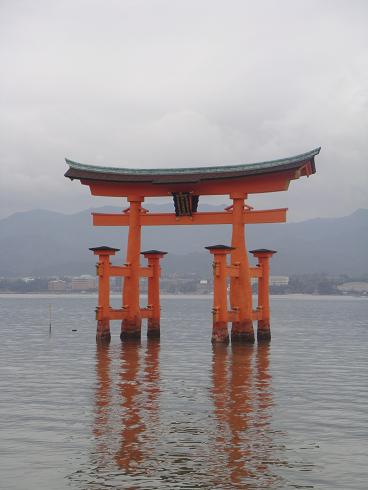
From Hiroshima, a direct ferry was boarded to one of the three most scenic places in Japan and a designated UNESCO World Heritage Site, the Island of Itsukushima (Miyajima). Once arriving on the island, everyone slowly made way towards the famous floating torii and Itsukushima Shrine. The walk provided glimpses of the island’s hungry deer population, restaurants selling local specialty foods such as oysters, anago (a type of eel) and also a variety of local stores selling various items such as rice spatulas, deer and monkey figurines and the small leaf shaped Japanese sweet called momiji manjuu. Once the floating torii was reached, it was understandable to why it is a famous site for tourists to visit in Japan. The floating torii was truly majestic and its distinctive red colour was quite contrasting to the overcast day. Itsukushima Shrine was also an interesting place to explore; with its large colourful barrels of sake lined across one wall, to the old interconnected Noh stage. The appearance of the darkened brown/black coloured walkway leading to the stage and the Noh stage itself looked quite different in comparison to the rest of the shrine’s red coloured architecture. The view of the floating torii from the shrine was also very impressive, although it would definitely be a worthwhile experience to return to see both the torii and Itskushima shrine once the high tide is up.
After the visit to Itsukushima shrine was completed, it was time for lunch and to try some of the famous local products, oysters and anago. Not surprisingly, when lunch was served both of these products were very fresh and delicious. Upon stepping out of the restaurant, it had become a beautiful sunny day and it was a wonderful way to end our time in Itsukushima Island and our three fun filled day trip. Travelling through the various places within Japan, getting to observe and try new things and obtaining information from locals from different places, provided a learning experience that could never be obtained from any book. Although this three-day trip was slightly hectic at times, it was an incredibly memorable, enjoyable and worthwhile experience. |
||||||||||||||||||||||||









|
Copyright(C)2009 JAL Foundation All Rights Reserved JAL Foundation JAL Bldg.,2-4-11,Higashi-shinagawa,Shinagawa-ku,Tokyo 140-0002 |