|
Visit to Sano Yakuyoke Daishi - Sano, Tochigi Prefecture Trinh Teresa After the passing of the New Year, a visit to Sano Yakuyoke Daishi - a famous temple in Tochigi Prefecture, was kindly organised for both of the JAL Foundation interns.
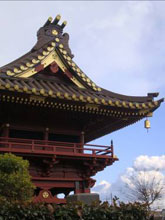
The trip began from Asakusa Station, where both interns and a JAL Foundation staff member met up early in the morning. After a short wait, we all boarded the express train that would take us to the town of Sano, which is located to the north of Tokyo in the Tochigi prefecture. The train trip was quite pleasant and interesting, since it provided an opportunity to view the changing landscape from the city of Tokyo to other smaller towns. Once arriving at the town of Sano, we travelled to the Sano Yakuyoke Daishi, a temple that is famous for warding off bad luck and misfortunes. Sano Yakuyoke Daishi (the official name being Kasugaokayama Tembo Rin-in Soshukanji) is a temple that was originally located at Kasagaoka, but was moved to its current location in the 1600s.
When arriving at the front gate of the temple, to my amusement the first things that I happened to spot were once again the food stalls. This time, through the steam that wafted from one of the stalls, I caught a glimpse of brown steaming, miso filled buns, whilst in another stall the smell of fresh mini castellas made my mouth water. Stepping inside the temple grounds, other food stalls were also seen selling foods, such as choco bananas, dango (small sticky mochi balls on a stick) and my favourite, giant takoyaki balls. After a quick look at the array of food stalls, we proceeded to the main area of the temple, where a friendly temple staff member escorted us to a tatami mat room to wait for the head priest. When the head priest arrived, he introduced himself with a friendly demeanor and a big smile and kindly provided a quick explanation of the day’s schedule. First on the list was the observation of a goma fire ritual. After donning a large white cotton shirt, usually worn by the temple workers, we were shown to the temple’s main hall where the goma fire ritual was held. Once entering the hall, we seated ourselves amongst the other visitors. However, since we entered in halfway of the ritual, we had unfortunately missed out on information and explanations on the correct praying method that was provided at the beginning. Luckily for us, we were allowed to view the goma ritual for a second time and this time we received explanations on the temple’s official name, its long history etcetera. The goma fire ritual, which consisted of the head priest of the temple continuously chanting in what to me did not even sound remotely like Japanese, hand movements, the throwing of such things such things as rice, water, honey etcetera into a burning fire as an offering to the gods, was something I had never had the chance to see before. Even with cramped legs and having become somewhat frozen from the coldness of the main hall, the ritual and the rhythmic beating of the temple’s drum was utterly absorbing. After the ritual was completed, all visitors in the main hall had the chance to approach the burning fire to sweep their bought talismans near the flames and they were also able to use the fire’s heat to heal any ailing parts of their body such as the knees, back, chest and head.
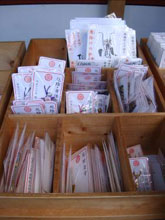
With the observation of the goma fire ritual completed, it was thankfully time for lunch. Since we were in the town of Sano, it was only natural to taste the local specialty, ramen. At a ramen store located near the temple, we ordered ramen and also vegetable gyoza. Normally, gyoza is filled with a mixture of meat, garlic and cabbage however, this gyoza with a vegetable and garlic filling was simply divine. After stuffing myself at lunch, fellow JAL Foundation intern and I had the opportunity to wear traditional red and white shrine maiden clothing and to sell the temple’s many lucky charms. Although shrine maiden clothing is only usually worn at shrines only, I thought it was absolutely wonderful of Sano Yakuyoke Daishi temple to provide the chance to wear such special traditional clothing. When I had to first step out in front of all of the temple’s visitors in the shrine maiden clothing, I was quite red faced, but once I was behind the table selling the abundance of charms, all of my initial embarrassment was quickly forgotten.
It was simply amazing to see the number of charms that were available and from one of the temple workers I was kindly provided with explanations on their different purposes as well. There were some charms to help ward off evil, some to keep the family safe, charms for longevity, charms to pass exams, charms for safe travelling…the list went on and on. Whilst selling the charms outside of the main hall, even though I was cold and my hands were frozen like blocks of ice, I thoroughly enjoyed every minute of the experience. By being asked at the time by the visitors on what charm would be appropriate for which situation, my overall interest in the numerous types of charms and their functions has extensively grown. The visit to Sano Yakuyoke Daishi temple was an absorbing and
fun experience. Having basically no prior knowledge to the different
sects of Japanese Buddhism or what a goma ritual entailed, from
this visit alone I was able to increase my overall knowledge on
both aspects. Not only that, being able to wear traditional clothes
usually worn by shrine maidens and also helping with the selling
of the many different types of charms was a wonderful and unique
experience that definitely will not easily be forgotten.
|