|
Summer Trips in Japan Trinh Teresa Sights of Kamakura and Enoshima A sightseeing trip for the JAL Foundation’s interns was organised by two university students from Tamagawa University to introduce the famous sights and foods of both Kamakura and Enoshima.
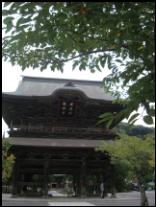
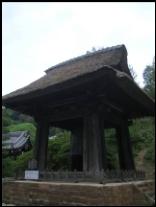
Kenchouji The day trip began from the quaint Kita Kamakura station, where a short walk brought everyone to Kenchou ji. Kenchou ji is one of the most famous temples located in Kamakura and is also the oldest Zen training monastery in Japan. The temple’s general gate, large in size and with its two doors opened, led one’s sight further into the temple grounds, towards the main gate named Tanuki mon (Badger’s Gate). Whilst walking towards Tanuki mon, the gate seemed to grow larger in size and it was not until it was reached closely that the immense size of the gate was gauged. Situated next to the looming Tanuki mon was one of Japan’s National Treasures, the Temple Bell. The appearance of the bell was quite ordinary; however it was difficult not to be impressed by its history of being cast in 1255 and also bearing an inscription of the founder of the temple as well.
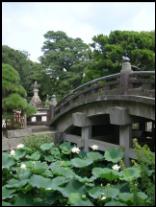
Other areas within Kenchou ji that were also visited were the Butsuden (Buddha Hall), Hatto (Dharma Hall) and Hojo (Main Hall). A magnificent view of the garden located at the rear of the temple grounds could be seen from the outdoor walkway located around the Hojo. Even if it was for but a moment, the garden’s expanse of greenery coupled with the picturesque pond provided a somewhat peaceful, calming and soothing effect amongst the throng of visitors and the Japanese summer heat.
Tsurugaoka Hachimangu Leaving Kenchou ji we continued to walk to the famous Shinto shrine
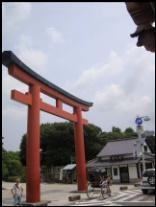
called Tsurugaoka Hachimangu. Upon reaching Tsurugaoka Hachimangu,
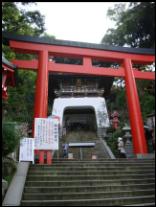
the shrine’s red Torii was seen to be situated immediately next
to a busy street with ongoing traffic and tourist filled rickshaws.
The main shrine area was located at the top of a long flight of stairs which supposedly consists of only 62 steps, though from the tiredness which had slowly crept in from the heat, the flight of steps looked liked it stretched quite a fair way and required more energy to climb then was available at the time. However, together with one of the students from Tamagawa University, we both enthusiastically made our way to the top of the stairs. After a quick photo pose upon reaching the top, we proceeded to enter the main shrine area. The shrine was filled with visitors throwing small change into the shrine’s money offering box, clapping their hands together and sincerely praying or making wishes.
From the abundance of ema (small wooden plaques) that hung in the shrine, it could be seen that the visitors to the shrine were not only Japanese but from an array of nationalities. A number of the wishes and prayers on the ema were written in languages such as Chinese, French and English, which is an indication that Japanese culture has an appeal to an array of people from around the world. Afterwards, many of the shrine’s visitors were seen to be choosing or reading Omikuji (strips of paper that contains various fortunes). Up until that moment I had not once tried omikuji, fearing that if perchance I were to receive a fortune of bad luck or the worst-case scenario extreme bad luck that the events foretold would in fact eventuate. Though, for this occasion, together with fellow JAL Foundation intern and one of the students from Tamagawa University, I decided to see what fortune was awaiting me. Fortunately, I received a good blessing whilst the other two to their dismay, received a bad fortune. As following Japanese tradition they both proceeded to tie their undesirable paper fortunes to one of the omikuji tying spots available at the shrine to leave their bad fortune behind.
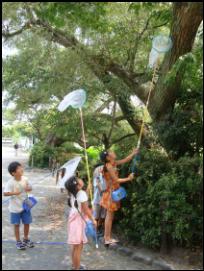
During the further exploration of the shrine’s grounds there was one experience that ultimately brought a smile to my face and made me think, ‘This is definitely a Japanese summer!’. The experience was simply seeing all the joy and fun a small group of young Japanese boys and girls, fully equipped with long handled bug catching nets and plastic insect containers hanging across from their shoulders, were having from running around the shrine’s grounds catching large, brown and noisy cicadas. At that moment, even though the heat had slightly begun to take its toll, the fun that was evidently being had was extremely contagious and I earnestly wanted to pick up a bug catching net myself and have a go at catching some of the chirping cicadas found amongst the shrine’s many trees. Unfortunately, our pressing schedule did not allow time for such an activity, so we started our walk to the next destination of interest, which was Komachi Doori.
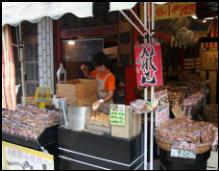
Komachi Doori Komachi Doori is a street predominately lined on both sides with small shops selling various items such as souvenirs, clothing, semi precious stones, glassware etc. However, personally its most distinctive feature was the abundance of shops selling different types of foods, especially of the sweet variety. We were all able to try a freshly made rice cracker and I diligently made space for a chocolate and rum filled crepe and also a cup of purple, sweet potato soft ice cream. It was quite an enjoyable and interesting experience to walk through the busy street, which was a pleasant contrast to the quiet atmosphere of the temple and shrine we had visited previously. Enoden
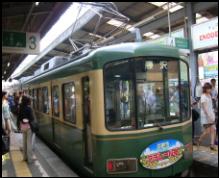
From the bustling atmosphere of Komachi Doori, we made our way to catch the famous green Enoden train. This local train, green and light yellow in colour had a somewhat retro feel to it, though its most attractive feature at the time was the extremely cool and comfortable air conditioned interior, which provided immense relief from the heat! After the short cooling train trip, we once again walked through the streets of Kamakura to one of the most famous sights of the area, the Kamakura Daibutsu (the Great Kamakura Buddha).
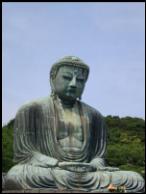
Kamakura Daibutsu Upon seeing the 13metre bronze Kamakura Daibutsu together with a scenic view serving as a backdrop, one could not help but be affected by its monumental size and overall beauty. This beautiful scenery prompted me to approach the round shaped incense holder located in front of the Kamakura Daibutsu and sweep incense smoke to any ailing parts of my body, which I mindfully in turn chose my head and brain to reap the benefits of the supposed curative powers within the incense smoke!
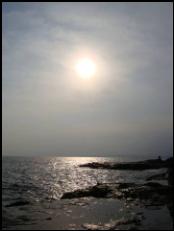
Enoshima Upon leaving Kamakura Daibutsu and with yet another lovely Enoden train trip, we travelled to the final destination of the day, Enoshima. The many people in the street casually wearing swimming costumes, the crowds of people swimming, young men and women barbequing on the beach and children, covered in sand and walking together with their family was an obvious indication the last place to sightsee at would predominately be interconnected with the sea. The walk over the bridge across onto Enoshima Island provided a view of a lively lane with numerous small stores located on either of its sides. Once reaching the end of the lane and by utilising the island’s many escalators, enabled us further access to the other shrines and sights located within Enoshima. The various styles of the shrines also made our exploration on foot much more engaging. Albeit the last leg of the trip was on occasion tiring, but the lengthy walk towards the seaside proved to be quite worthwhile. After all the hard work of walking in the stifling heat and constant perspiring, at the last stop of the day we were rewarded with a beautiful sea view, a setting sun and a refreshing cool sea breeze. We were but some of the many people enjoying the seaside. Other visitors were seen to be fishing, swimming, relaxing whilst watching the sea and there were also children with their parents collecting molluscs from the rock pools around the seashore. It was hard to resist the temptation to not remove one’s shoes and have a quick frolic in the water, however the whim was dutifully curbed due to the lack of time. Returning back through the island towards the restaurant areas by the flights of seemingly never ending stairs was somewhat of a challenge. However, after all the sweat and leg pains, we were rewarded with the sight of the restaurant we were to dine at.
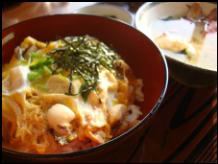
The restaurant’s menu consisting of mainly seafood dishes came as no surprise since Enoshima is famous for its seafood. The set meal I had chosen included a Sazae donburi (rice topped with a mixture of egg, onion and a type of mollusc) with a beautifully flavoursome kani jiru (crab soup) and pickles. The fulfilling dinner with the beautiful seaside view managed to provide the much-needed energy for the final descent through the island.
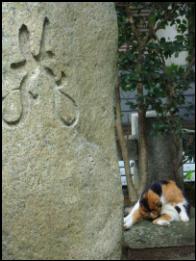
One aspect of Enoshima in which I had a particular fondness towards, was the abundance of cats found laying throughout the area in a relaxed manner. The cats were not only seemingly unaffected by the ongoing human activity surrounding them, but also seemed to do whatever they pleased. Whether it was to lay unmoving in the middle of a path or shop area where visitors frequented, or casually walk through the midst of tourists, these island cats of a mixture of colours, sizes and characters never failed to capture my attention. A final treat before the trip’s end was to taste one of Enoshima’s specialties, Tako senbei (an octopus rice cracker). Tako senbei is made by pressing baby octopus into a special machine, which flattens and cooks the octopus, turning it into an extremely large thin sheet of rice cracker. Not only was it was an interesting process to watch, but also a perfectly delicious way to end an extremely fun filled day. This day long trip was quite informative and was an opportunity to visit the many famous sights of Kamakura, such as Kenchouji, Tsurugaoka Hachimangu, Komachi Doori and Kamakura Daibutsu. The chance to ride upon the Enoden train and to also visit Enoshima Island was also provided. Though the heat at times made moments of the trip slightly strenuous, the historic shrines and temples of Kamakura were extremely worthwhile to visit in person, whilst the majority of the sights seen during the trip were truly stirring, breathtaking and scenic. Given the chance, I would yet again repeat the whole process over, even if it meant having to brave the sweltering Japanese summer heat and the numerous flights of stairs of Enoshima Island! Ryogoku and Okachimachi Two students from Tamagawa University once again organised a short day trip for the JAL Foundation interns to visit parts of Tokyo and its attractions.
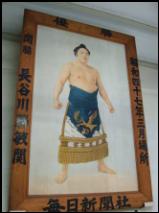
Sumo Stable Arriving at Ryogoku station, it was evident the area had a strong connection to one of Japan’s historic sports, Sumo. An indication of this was whilst walking through the station, it was noticed that two large paintings, bearing the images of two sumo wrestlers were hanging high from one of the station’s walls. This would be just one of the many sumo related items that would be seen around Ryogoku throughout the day. Once exiting the station, a taxi was taken to the sumo stable, which was where we were to observe a morning sumo practise session.
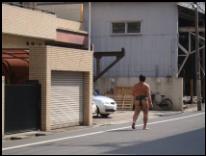
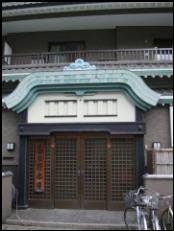
Upon our arrival at the sumo stable and whilst photographing the exterior of the sumo building, a sumo wrestler exited from the stable’s main door and casually strolled down the street with nothing on but his mawashi (sumo belt). From that moment of seeing my first sumo wrestler in person, I was quite excited to have the opportunity to observe a sumo practise session.
However, a moment of dejection was felt when we were informed that the practise session for the day had finished early on in the morning, therefore we would regrettably be unable to enter the stable. Fortunately, whilst walking to our next destination, sumo wrestlers were spotted to be stretching and resting across the street. After a quick photo request and upon the inquiry of one of the Tamagawa university students, we learned from one of the sumo wrestlers that it might be possible for us to enter their sumo stable to watch the training session that was currently running. Elation was felt from this stroke of luck that enabled us the opportunity to watch an intensive and powerful sumo training session. Upon entering the sumo stable and with the removal of our shoes, we seated ourselves in seiza fashion on tatami mats. Due to the strict and rule bound nature of the sumo world, quietness was to be kept during the observation of the sumo wrestler’s training session and it was to a certain extent disappointing that photographs could not be taken. When seated, located before us was a sunken square area with a grey like sand floor, which contained a dohyou (straw circular ring), where two sumo wrestlers would have a practise match within. Amongst the sumo wrestlers present who were training, it was noted that two different coloured mawashi were being worn. A white mawashi was worn by the sumo wrestlers who were seemingly more experienced and of a higher rank than those wearing the darker coloured mawashi, the lower ranked trainees. Throughout the training session, the trainees stood on the outside of the dohyou, holding towels whilst diligently watching the training matches of the higher ranked sumo wrestlers. The many jobs that the trainees were seen to perform for the higher ranked sumo wrestlers were to hold and offer towels to the sumo wrestlers for their usage, wipe the sweat and sand off from the bodies of higher ranked members after their practise match and also offer water in wooden ladles for the experienced members to drink or rinse their mouth. One could only imagine the strict regime that all members of the sumo stable must adhere to and beginning as a lower ranked sumo trainee seemed an especially arduous and restrictive way of life. After the higher ranked sumo wrestlers had completed their training session, it was time for the junior members to train. Their training consisted of drills such as the repetition of a leg-stamping stance, circling the dohyou in unison whilst maintaining a lowered leg stance, push ups etc. The thought of the rigorous and obviously physically and mentally challenging training that sumo wrestlers must endure on a daily basis for this traditional Japanese sport captured my well-deserved attention and admiration at the time. Once the sumo training was completed, much to the relief of my semi-paralysed legs, we continued to the Sumo Museum.
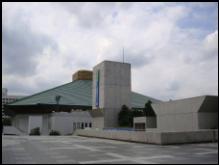
Sumo Museum Located within the Sumo stadium in Ryogoku, the museum provided an insight into sumo when it was at its height in popularity during the reigning period of eight Yokozuna (Grand Masters of Sumo). Details of eight famous Yokozuna was provided and other items that were also exhibited were the intricate ornamental belts worn by sumo wrestlers during the ritual ceremonies before sumo matches, books and articles picturing news of past famous sumo competitions, overly large red hand print autographs from past famous Grand Masters etc. One wall of the museum was interestingly lined with portraits of previous sumo wrestlers. The array of different styles of the various portraits also gave an understanding of the long standing history of the sport itself i.e. with the earliest portraits being in an ukiyoe (coloured wood block print) style and progressing further down the line, the portraits changed to being rendered in paints in a three dimensional life like style, whilst the most recent portraits were in photographic form. A video that provided an introduction to the numerous sumo moves was immensely informative and absorbing and also managed to fire a spark of enthusiasm to at least attempt one of the moves later on in the day! To conclude our morning Sumo experience, lunch was to be chanko nabe, a one-pot dish filled with various vegetables, tofu, meat or seafood which is boiled in a chicken or miso broth and is usually eaten by sumo wrestlers. It was noted that the restaurants around the sumo museum serving chanko nabe were quite expensive, however after some research from the Tamagawa university students, a restaurant was found to serve chanko nabe for a reasonable price.
The restaurant we dined at had a distinctive sumo atmosphere. Shoes were to be removed at the front entrance and on the walls of the restaurant various posters and photographs related to the sport of sumo were displayed. The anticipation for our individual chanko nabe sets was also not disappointed. The individual clay nabe pots filled with an assortment of ingredients such as cabbage, chicken, seafood, bean sprouts, tofu and mushrooms in a broth was brought to the table on a mini gas cooker. Once our gas cooker had been lit and after steam could be seen escaping from our nabe pots, it was finally time to eat. Not surprisingly, the chanko nabe was absolutely delicious and quite filling and it is no wonder that sumo wrestlers would have no issues eating this dish on a regular basis.
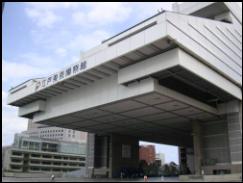
Edo-Tokyo Museum After lunch we proceeded to the next destination point of the trip,
Edo-Tokyo Museum, which was conveniently located behind the Sumo
Museum and stadium.
The museum contained many interactive features and intricate models that made learning of the history of Edo-Tokyo to present day Japan quite appealing. Personally, it was an absolute pleasure to be able to clamber into a replica of a carriage that was once used by past daimyos(feudal lords), spin a heavy fire brigade notifying stick, attempt to carry water carrying buckets, sit upon a rickshaw and bicycle carriage, enter a white phone booth from the Meiji period and to use the olden style public phone etc. All of these interactive features along with being allowed to take photographs of the various museum displays made the enjoyment of the museum tremendous. An aspect I found to be extremely regrettable was learning that some of the past buildings that existed in the Meiji period were consequently destroyed in the Great Kanto Earthquake in 1923. One such building was the Ryounkaku, a tall brick tower that was located in Asakusa and had Japan’s first operational elevator. From viewing the replica, which was constructed by using past photos of the tower before it was destroyed, a sense of regret emerged that the opportunity to see Ryounkaku in real life and other such buildings of such grand architectural style, has been unfortunately lost forever. After completing a romp around the 5th and 6th levels of the museum, we made our way to the famous shopping street located in Ueno named Ameyoko.
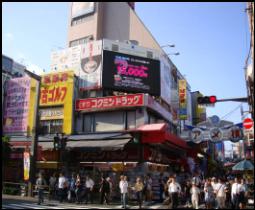
Ameyoko Ameyoko is a relatively long shopping street, with an extremely lively and bustling atmosphere. The street is lined with a diverse range of shops, from stores selling shirts, shoes, bags, umbrellas and souvenirs, to the food variety such as, Japanese snacks, Turkish kebabs, takoyaki, fruit and vegetables, fish stalls etc. There was also an abundance of game centres, which would indicate that Ameyoko is a popular area for youths to visit. Even though it was a weekday, the street was quite crowded with an abundance of people shopping, people standing whilst eating takoyaki and also the many tourists. All in all, the atmosphere of Ameyoko provided a contrast to the strict and regimental environment of the sumo stable and somewhat quiet atmosphere of the museums that we had visited earlier in the day. This trip through the areas of Tokyo provided an insight into one of Japan’s most historical and famous sports, Sumo. Also from having the opportunity to visit the Sumo museum, a deeper understanding of the history and the rules and regulations of the sport were also gained. The interactiveness of the Edo-Tokyo museum, along with the many English translations provided at the main attractions enabled an extremely enjoyable and fun learning experience of Japan’s past to present history, whilst the ever so busy and active atmosphere of the shopping street of Ameyoko and its pineapple on a stick, was a lovely, delicious and satisfying way to conclude our day trip! |






|
Copyright(C)2009 JAL Foundation All Rights Reserved JAL Foundation JAL Bldg.,2-4-11,Higashi-shinagawa,Shinagawa-ku,Tokyo 140-0002 |