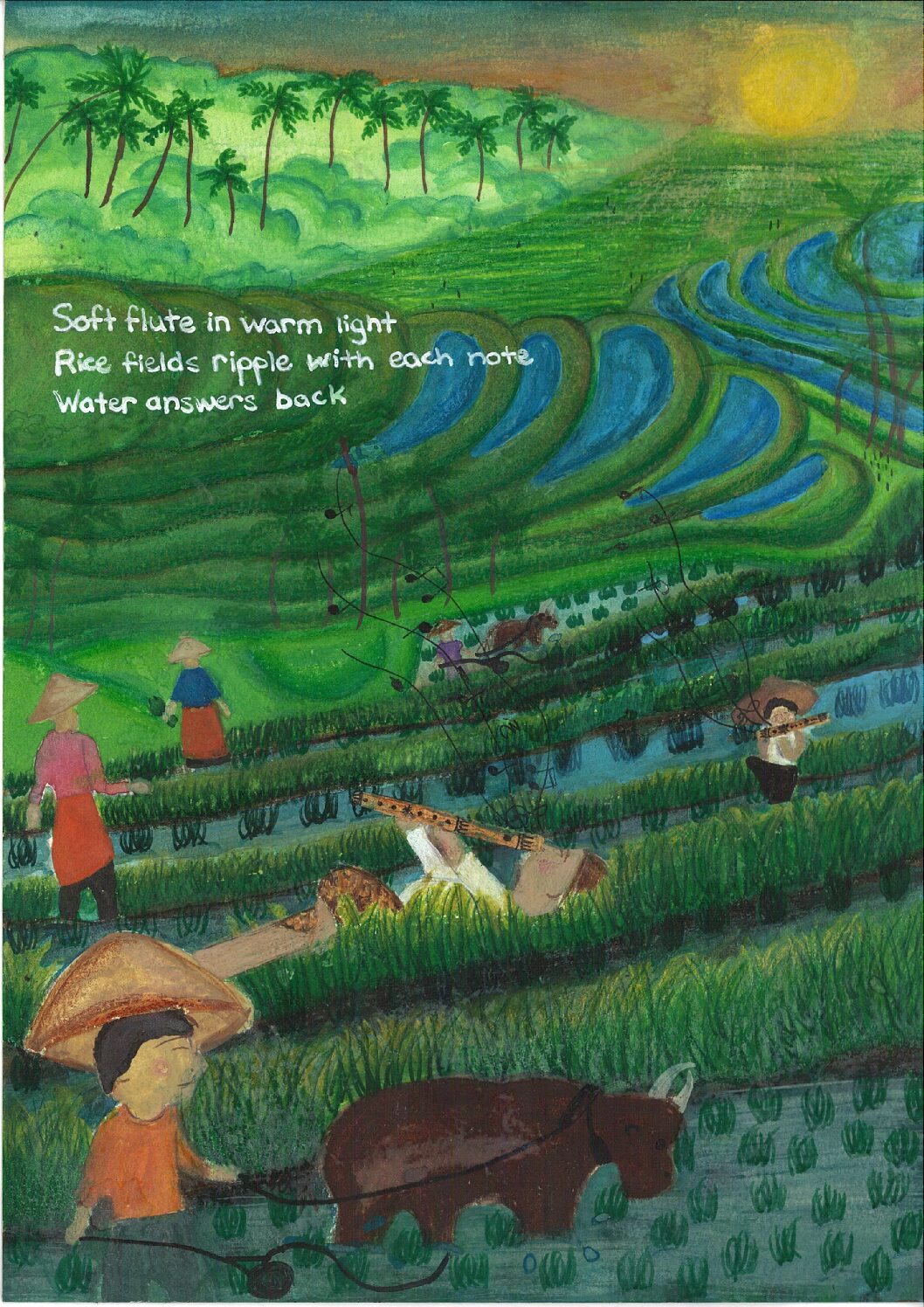
Soft Flute in warm light
Rice fields ripple with each note
Water answers back
暖かい光の中の静かな笛
音色とともに波打つ田んぼ
水が返事する
[作者情報]
[Author Information]
Celina Liong
( Celina Liong )
Jakarta/11歳
第19回The 19th 2025-2026年2025-2026 インドネシア大会Indonesia Contest
テーマ 「おと」 Theme "Sound" 大賞作品 JAL Grand Prize Winner
田植え仕事の始まる季節。作者の住むインドネシアの素敵な田園風景が想像されたよ。暖かい光の中、静かに響き渡る笛の音。いろんな種類の笛が農事に関わって存在するのだね。田畑に水の惠みをもたらす雨を祈る「カエル笛」。鳥を追い払うための音を生む風笛「スナリ」。そして民族楽器の代表的な縦笛「スリン」。今年の豊作を祈る楽器の音が其処此処で響いている。句の中の「Water answers back」は、その笛に呼応するかのように、泥田を透く牛の歩行、用水のせせらぎなどがたてる音のことだね。そのほかにもそよぐ風、農夫の声、たくさんの音がイラストからあふれ出すのを感じたよ。
The season when rice planting begins. I could picture the lovely rural landscape of Indonesia, where the author lives. The sound of a flute echoing quietly in the warm light. There are various types of flutes associated with farming, aren’t there? The ‘frog flute’, used to pray for rain to bring the blessing of water to the fields. The ‘sunari’, a wind flute that produces a sound to scare away birds. And the ‘sulin’, a representative vertical flute among traditional instruments. The sounds of these instruments, praying for a bountiful harvest this year, echo here and there. The phrase ‘Water answers back’ in the haiku refers to the sounds made by the footsteps of cows wading through the muddy fields and the babbling of irrigation channels, as if in response to the flutes. I also felt that a multitude of other sounds—such as the gentle breeze and the voices of the farmers—were overflowing from the illustration.